Home and Garden Tour: Heyward Washington House

Built in 1772, the Heyward-Washington House was the home of Thomas Heyward, Jr., a prominent statesman and one of South Carolina's four signers of the Declaration of Independence. The three-story brick structure is a quintessential example of Georgian double-house architecture, characterized by its symmetrical facade and central hallway. During the American Revolution, Heyward’s patriotic activities led to his capture by the British; while he was imprisoned in St. Augustine, the British military occupied the house and used it as a headquarters for their high-ranking officers.

The house earned its hyphenated name from a historic visit in May 1791 by President George Washington. During his week-long tour of the Southern states, the city of Charleston rented the house from Thomas Heyward for the President’s use. Washington was famously impressed by the city's hospitality and the elegance of his lodgings, which served as his "presidential mansion" during the stay. Today, the house is meticulously furnished with 18th-century Charleston-made furniture, including the renowned Holmes Bookcase, and is considered one of the city's most prestigious museum houses.

Beyond its grand interiors, the site is home to Charleston’s only 18th-century kitchen building open to the public, offering a rare glimpse into the daily operations of an urban plantation. The property includes the original carriage house, formal gardens, and work yards where enslaved people lived and labored to maintain the Heyward family’s lifestyle. Acquired by the Charleston Museum in 1929, it was the city's first historic house museum, preserved to tell the complex story of the Revolutionary era and the diverse people who inhabited the grounds.
Home and Garden Tour : Nathaniel Russell House
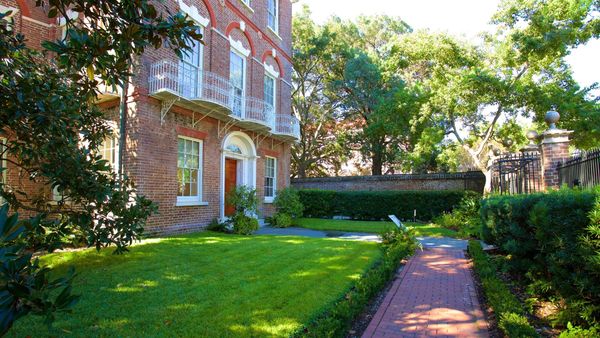
The Nathaniel Russell House, completed in 1808 for one of America's wealthiest merchants, is widely regarded as one of the finest examples of Neoclassical architecture in the United States. Located at 51 Meeting Street, the house cost an astronomical $80,000 to build at a time when most high-end homes cost less than $10,000. Its exterior is marked by a rigorous symmetry and fine brickwork, but the true brilliance of the design lies in the interior, where Russell moved away from traditional square rooms in favor of more complex shapes, including oval and polygonal drawing rooms.

The most famous architectural feature of the house is the magnificent three-story cantilevered spiral staircase. This "free-flying" stair appears to float without visible means of support as it rises through the center of the house, held together by a precise tension in the wood and masonry. This engineering marvel serves as the spine of the residence, connecting grand formal spaces that are decorated with elaborate plasterwork, gold leaf, and vibrant period-correct paint colors that have been meticulously restored through forensic paint analysis.
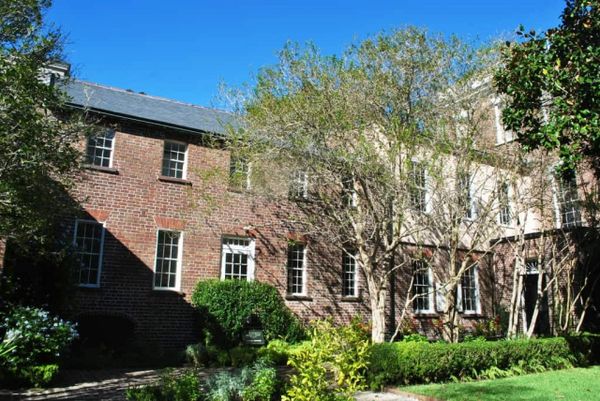
In recent years, the Historic Charleston Foundation has expanded the site's interpretation to include the lives of the enslaved people who worked and lived there. Significant archaeological and architectural research has been conducted on the kitchen house and slave quarters located at the rear of the property. By examining artifacts found under floorboards and studying the physical evidence of the working areas, the museum now provides a more comprehensive history of the property, contrasting the extreme luxury of the Russell family with the daily realities of the eighteen enslaved individuals who maintained the estate.
We Would Love To Hear From You
Our tours are 100% private so we are able to work around your schedule. We do request 24 hours notice but you are encouraged to ask for "day of" availability and we will do our best to accommodate your request if possible.
These are walking tours and while we do not cover a long distance, you will need to be able to stand or walk for at least two hours. Please call us directly to book a tour or if you have any questions.
Please call 704.408.8787 to make a reservation.
Or reach us by email at casongaither@gmail.com